
EWË – ARTESANIAS WAORANI
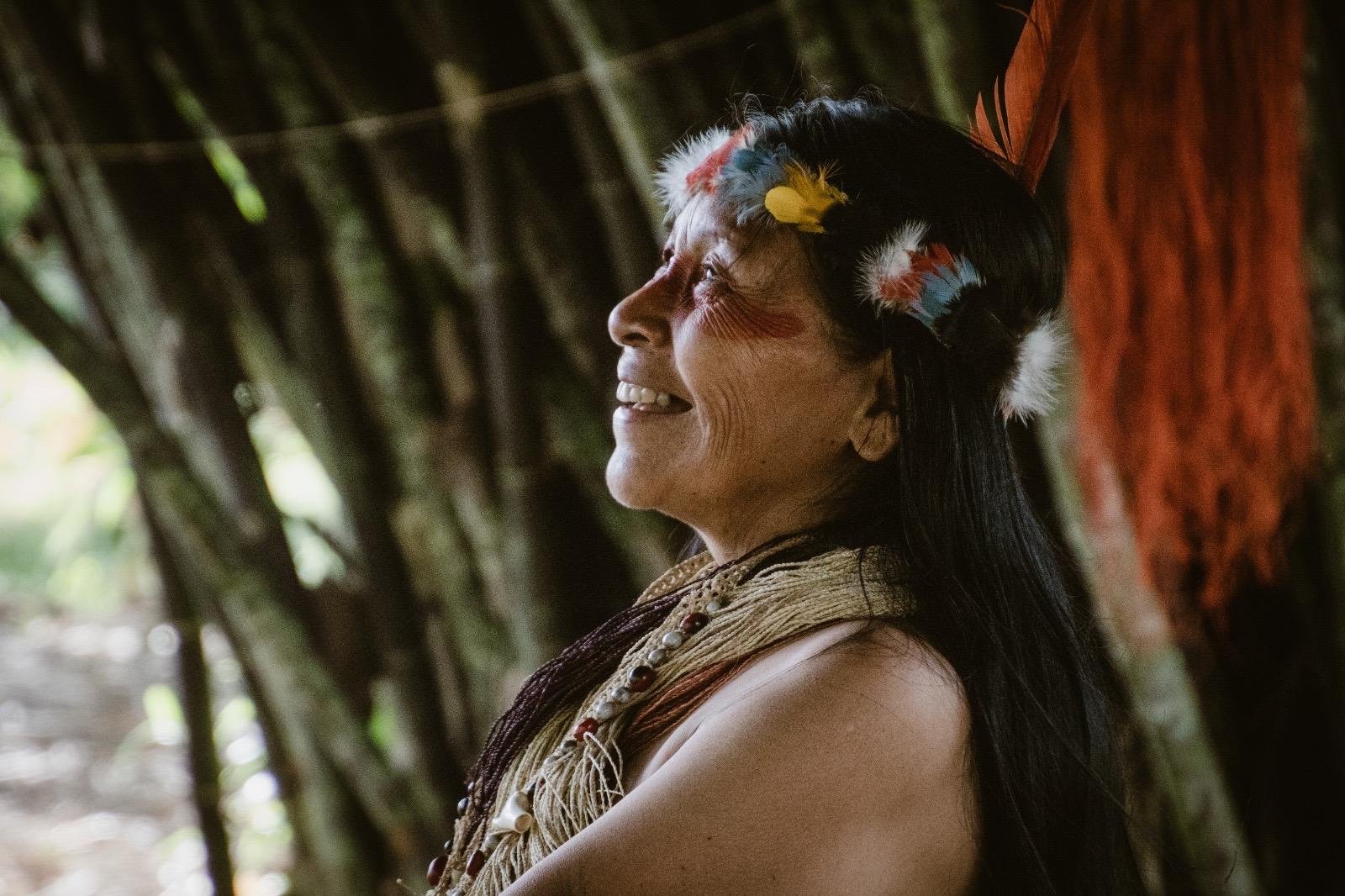
Ewe Artesanía was conceived as a space for intercultural encounter between Waorani and Kichwa women from the Ecuadorian Amazon.
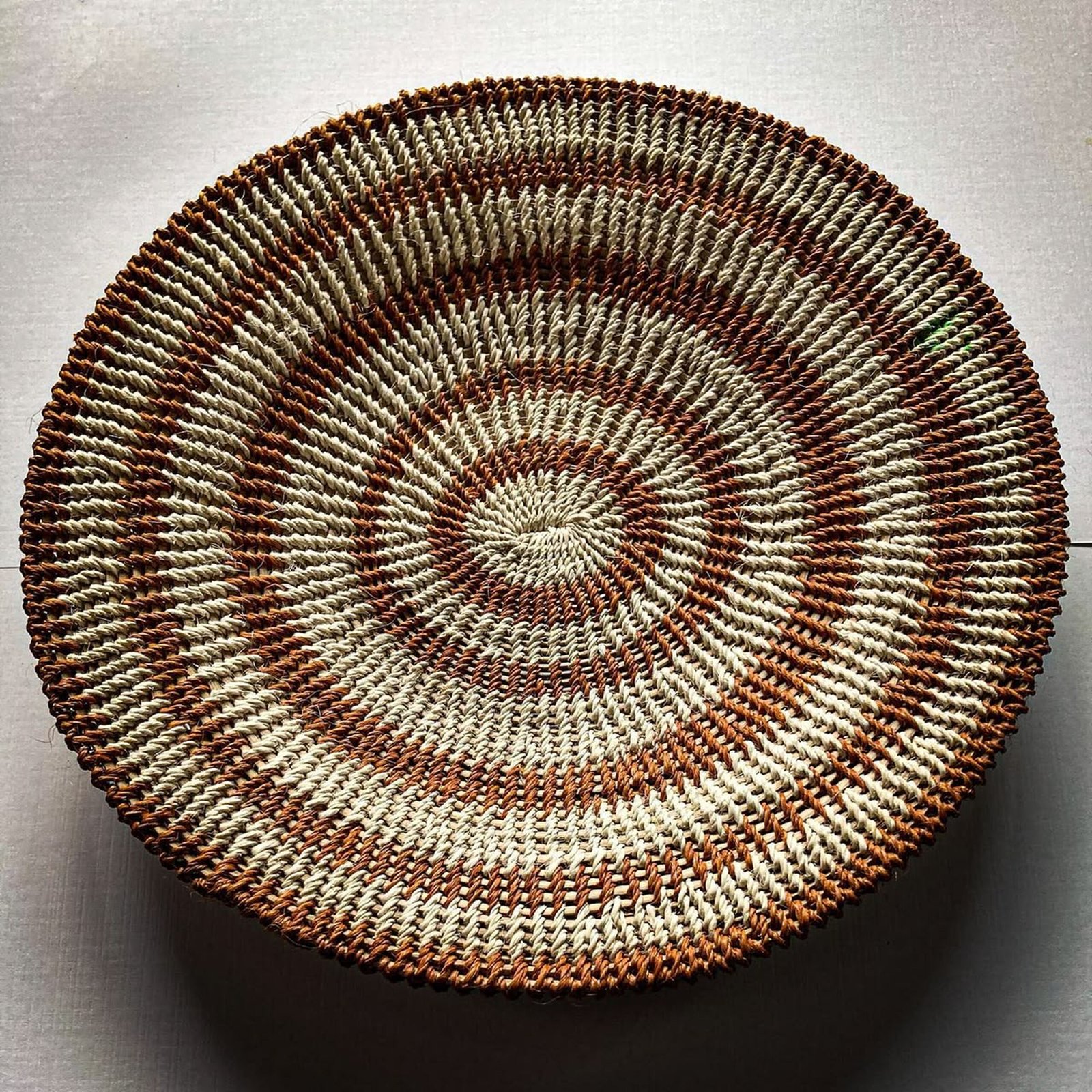
The project presents a collection of pieces that bring together two ancestral languages: weaving in chambira fiber and traditional Amazonian ceramics.
Each piece is the result of a dialogue between cultures, where the fiber woven by Waorani women meets clay forms crafted by Kichwa women. This convergence gives shape not only to objects, but also to a shared narrative of territory, identity, and cultural resilience.
Ewe does not seek to reinterpret tradition, but to project it forward, preserving its essence while allowing it to engage in dialogue with the contemporary world.
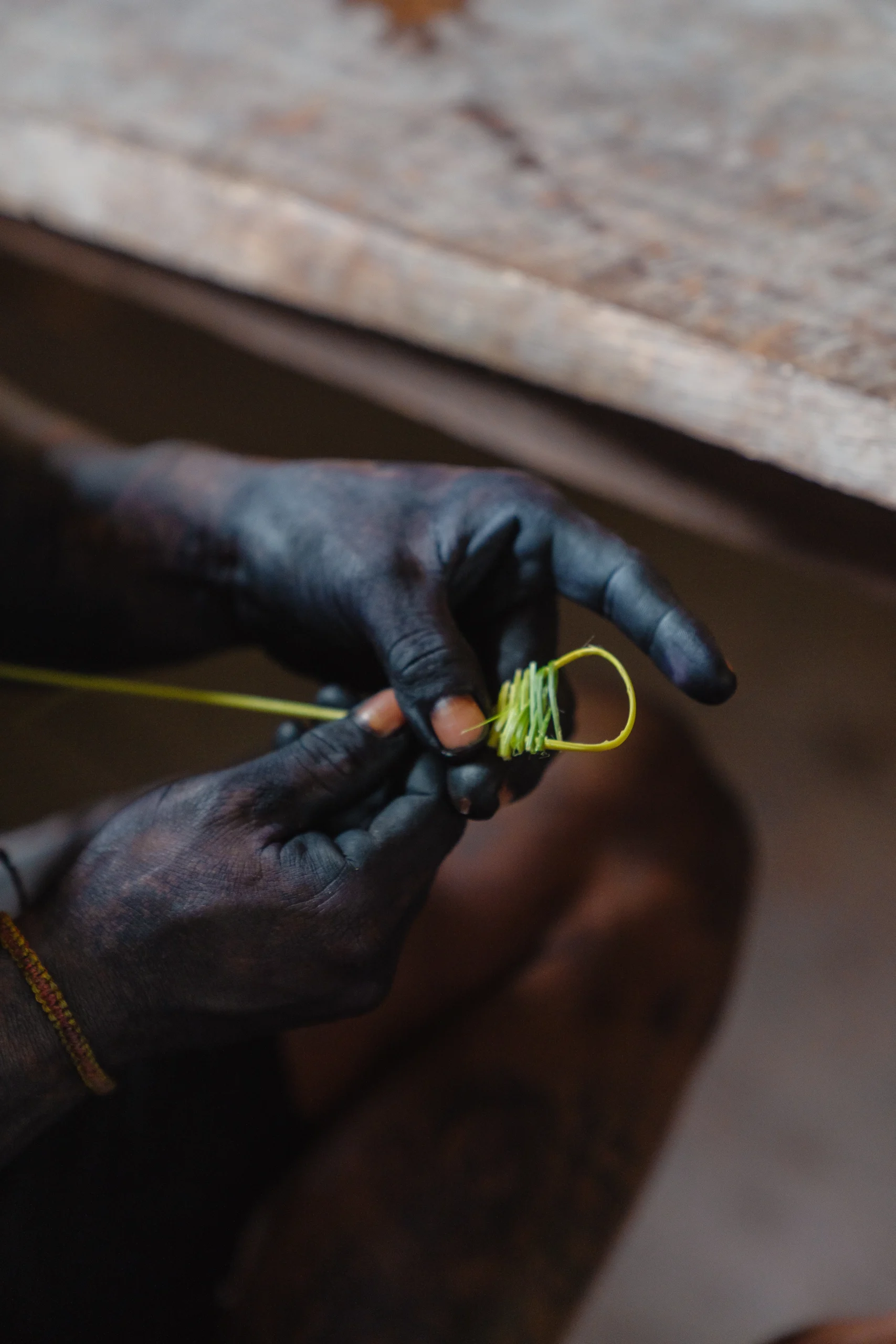
Chambira is a plant fiber obtained from an Amazonian palm (Astrocaryum chambira), whose knowledge, handling, and use form part of the cultural heritage of the Waorani people.
Its process involves harvesting in the forest, drying, hand-spinning, and dyeing with natural pigments obtained from plants, roots, fruits, and bark. This knowledge has been passed down from generation to generation by Waorani women, who have kept this practice alive as an expression of identity and relationship with the territory.
Chambira weaving is not merely a technique: it is a space of teaching, memory, and cultural continuity.
The clay elements, on the other hand, are crafted by Kichwa women using clays collected from Amazonian rivers. These are shaped by hand, fired, and decorated with natural pigments such as wituk, achiote, and ash.
The union of chambira fiber and clay gives rise to pieces that embody the connection between peoples, materials, and knowledge rooted in the forest.
Ewe Artesanía is the result of a collective process led by Indigenous Amazonian women.
The project recognizes and respects the authorship of each practice: chambira weaving as knowledge belonging to Waorani women, and ceramics as a living tradition of Kichwa women.
This collaboration does not seek to homogenize, but to coexist. Each piece preserves the identity of its makers while constructing a shared language through encounter.
Ewe is, in essence, a space where different cultures intertwine without losing their origin, giving rise to a proposal that is both ancestral and contemporary.
studio link: www.instagram.com/ewe.arte